Plan2Dish — Case Study
Designing and launching an AI-powered kitchen assistant for modern families.
Visit live site→Plan2Dish began with a simple question: "Why is deciding what's for dinner still so difficult?"
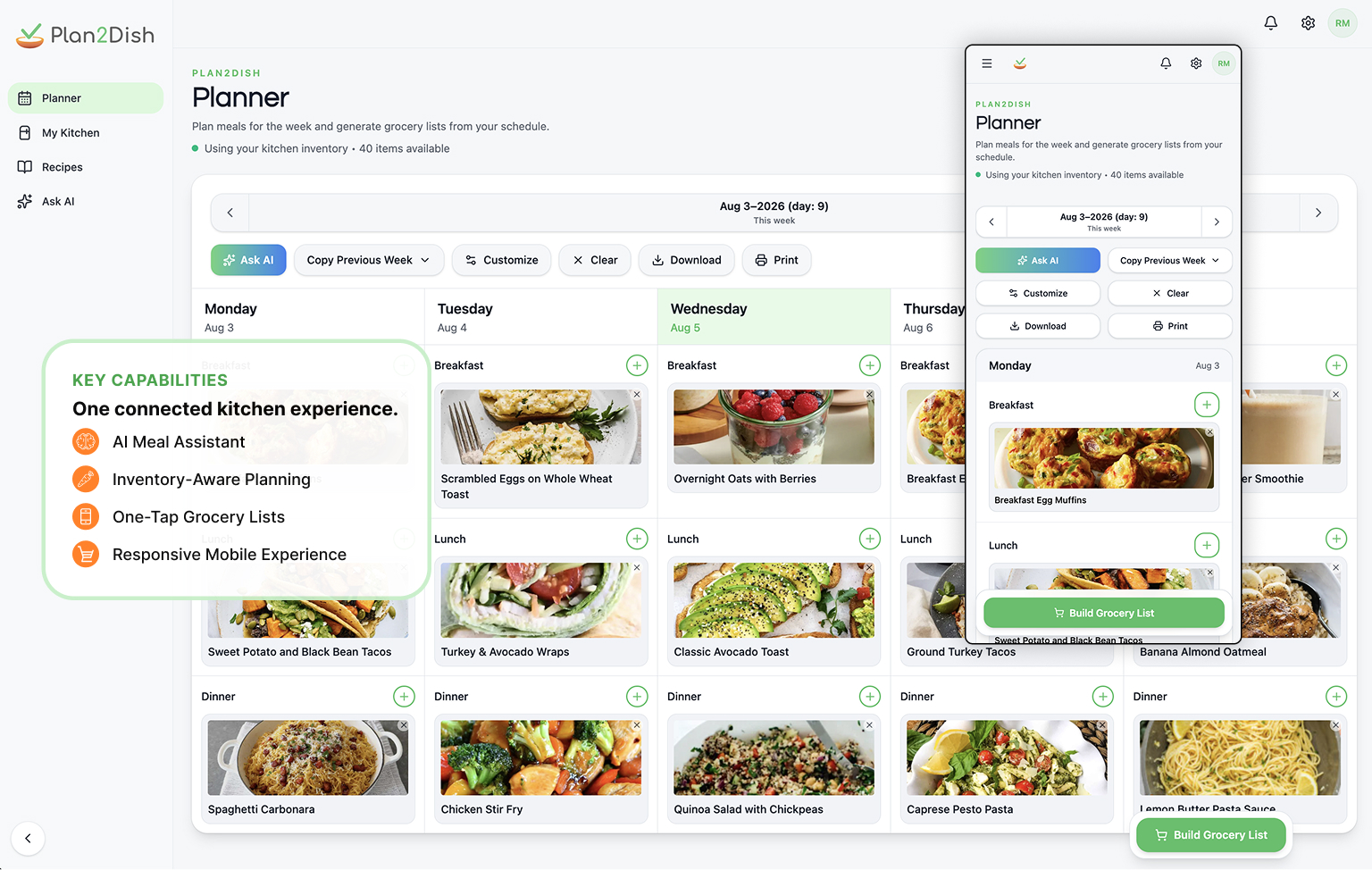
As founder and lead product designer, I designed and launched a modern SaaS platform that combines meal planning, recipe organization, grocery management, AI-powered kitchen assistance, and household personalization into one seamless experience.
This project represents the complete product design lifecycle, from product strategy and UX research through branding, design systems, interface design, AI integration, front-end implementation, and public launch.
- Founder
- Lead Product Designer
- UX & Product Strategy
- AI Product Design
Product Vision
The goal was never to create another meal planning app. The vision was to build a single intelligent platform that understands how families actually cook, shop, and organize their kitchens. Every feature should reduce friction, save time, minimize food waste, and remove the daily stress of deciding what to cook.
From Designer to Founder
For more than 25 years, I've designed digital products across a wide range of industries. Plan2Dish gave me the opportunity to solve a problem much closer to home.
Like many families, we asked the same question every evening: What's for dinner?
Meal planning, keeping track of what was already in the kitchen, building grocery lists, and balancing everyone's preferences felt more complicated than they should.
Rather than accepting those frustrations, I designed a better experience.
Plan2Dish combines everything I've learned throughout my career into one connected kitchen platform. It transforms a daily household challenge into a seamless, AI-powered experience.
Problem
Meal planning isn't just about choosing recipes. It's a fragmented workflow spanning memory, shopping, inventory, budgeting, and family coordination. Most products solve one task instead of the entire experience.
- ●Families forget what food they already own, leading to duplicate purchases and food waste.
- ●Recipes, meal plans, and grocery shopping are disconnected across multiple apps and tools.
- ●Meal planning becomes a repetitive weekly mental burden for busy households.
- ●Existing solutions optimize individual tasks instead of the complete cooking workflow.
“The best products solve everyday problems so naturally that they become part of people's routines.”
Research
I approached the problem through competitive analysis, journey mapping, rapid prototyping, and user feedback to identify where AI could remove friction from everyday meal planning.
Design Goals
- ◆Reduce decision fatigue around meal planning.
- ◆Reduce food waste through inventory visibility.
- ◆Unite planning, recipes, and shopping into one experience.
- ◆Make AI genuinely useful, not gimmicky.
- ◆Design for the entire household, not just one person.
Leading the Product End-to-End
As founder and lead product designer, I owned every stage of the product lifecycle—from strategy and UX to AI experiences, implementation, and launch.
Defined the product vision, roadmap, and MVP.
Synthesized family pain points into design opportunities.
Created journeys, IA, wireframes, and interactions.
Built the interface and design language.
Developed reusable components and patterns.
Designed conversational planning and intelligent recommendations.
Brought the product to life with React, TypeScript, Supabase, and Lovable.
Released the product, onboarded users, and iterated from feedback.
The Design Process
- ◎
Discovery
Understanding how families plan meals, shop, and manage their kitchens.
- ◈
Opportunity Mapping
Analyzing existing products, identifying gaps, and uncovering opportunities for a connected experience.
- ✦
Ideation
Exploring different approaches through user flows, information architecture, and rapid concepts.
- ◇
Interface Design
Building an intuitive interface supported by a scalable design system.
- ▶
Prototype
Rapid prototyping to validate ideas before implementation.
- ↗
Launch
Shipping the product and validating decisions with real users.
- ↻
Iteration
Continuously improving the experience through user feedback and product iteration.
Design Challenges
Decision Fatigue
Families spend too much time deciding what to cook each day.
Personalized meal planning that reduces repetitive daily decisions.
Food Waste
Families lose track of what they already have, leading to unnecessary purchases and waste.
A visible kitchen inventory that connects what families have with what they can make.
Disconnected Tools
Meal planning, recipes, grocery lists, and kitchen inventory are often scattered across separate tools.
One connected workflow from planning to inventory to grocery shopping.
Making AI Useful
Generic AI recommendations lack the household context needed to be genuinely useful.
Context-aware AI grounded in household preferences, available ingredients, and kitchen inventory.
Key Product Decisions
Simple navigation as features grow
Created a predictable top-level structure that can accommodate new features without overwhelming users.
AI that assists, not dominates
Integrated AI into existing workflows so it supports users without pulling them away from their task.
Progressive disclosure
Revealed advanced options only when needed to keep everyday tasks simple and focused.
Familiar interaction patterns
Used established interaction patterns so users could navigate the product without learning unfamiliar behaviors.
Household-first design
Designed preferences, planning, and shared experiences around the household rather than a single user.
Warm, welcoming interface
Used approachable typography, soft surfaces, and friendly language to make the experience feel helpful rather than technical.
Design System
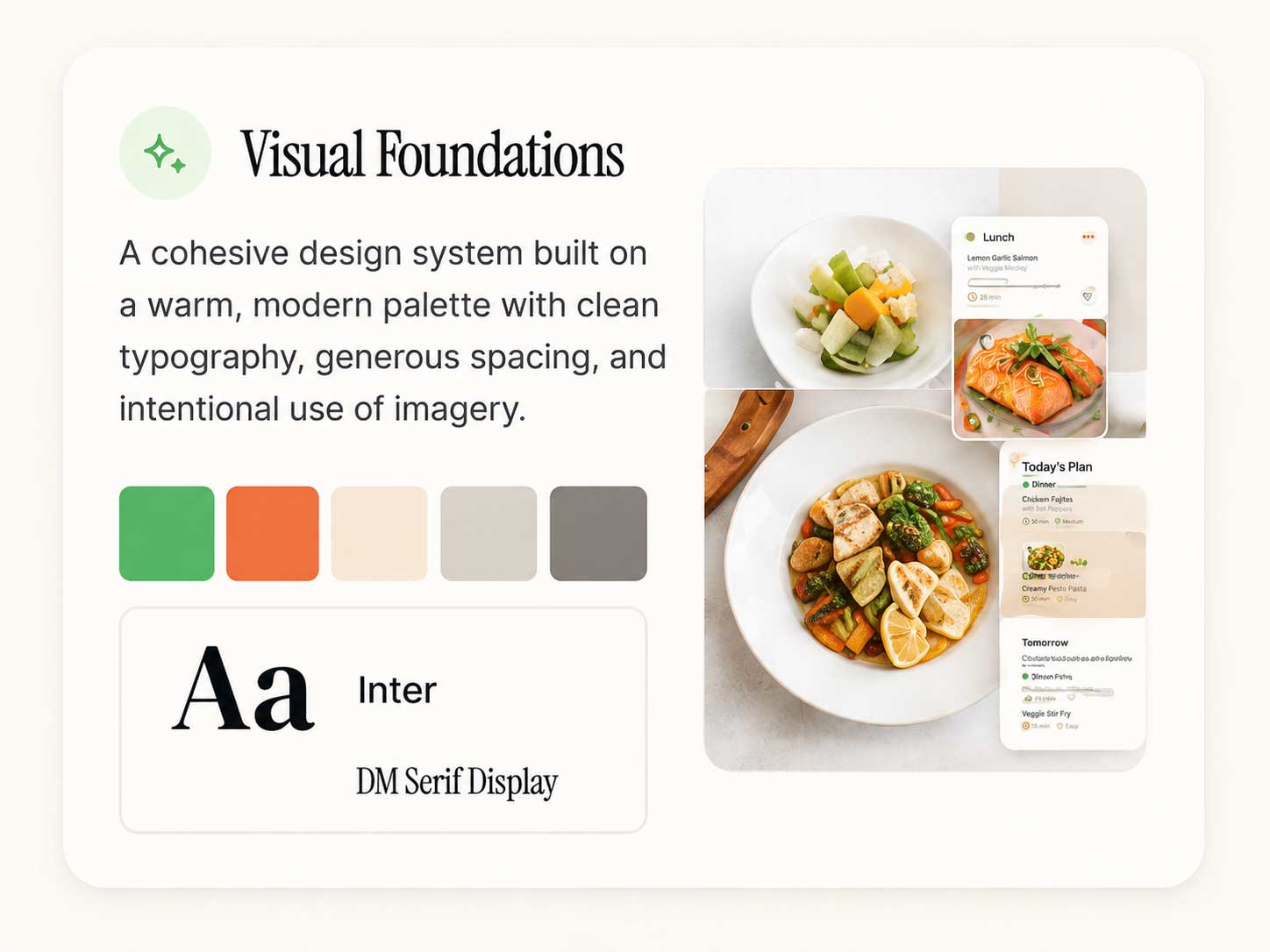
Shared components and patterns create a consistent visual and interaction language across Plan2Dish. The system allows new features to feel connected to the product while reducing one-off design decisions.
Visual Foundations
Typography, color, and spacing establish a consistent hierarchy and visual rhythm across the product.
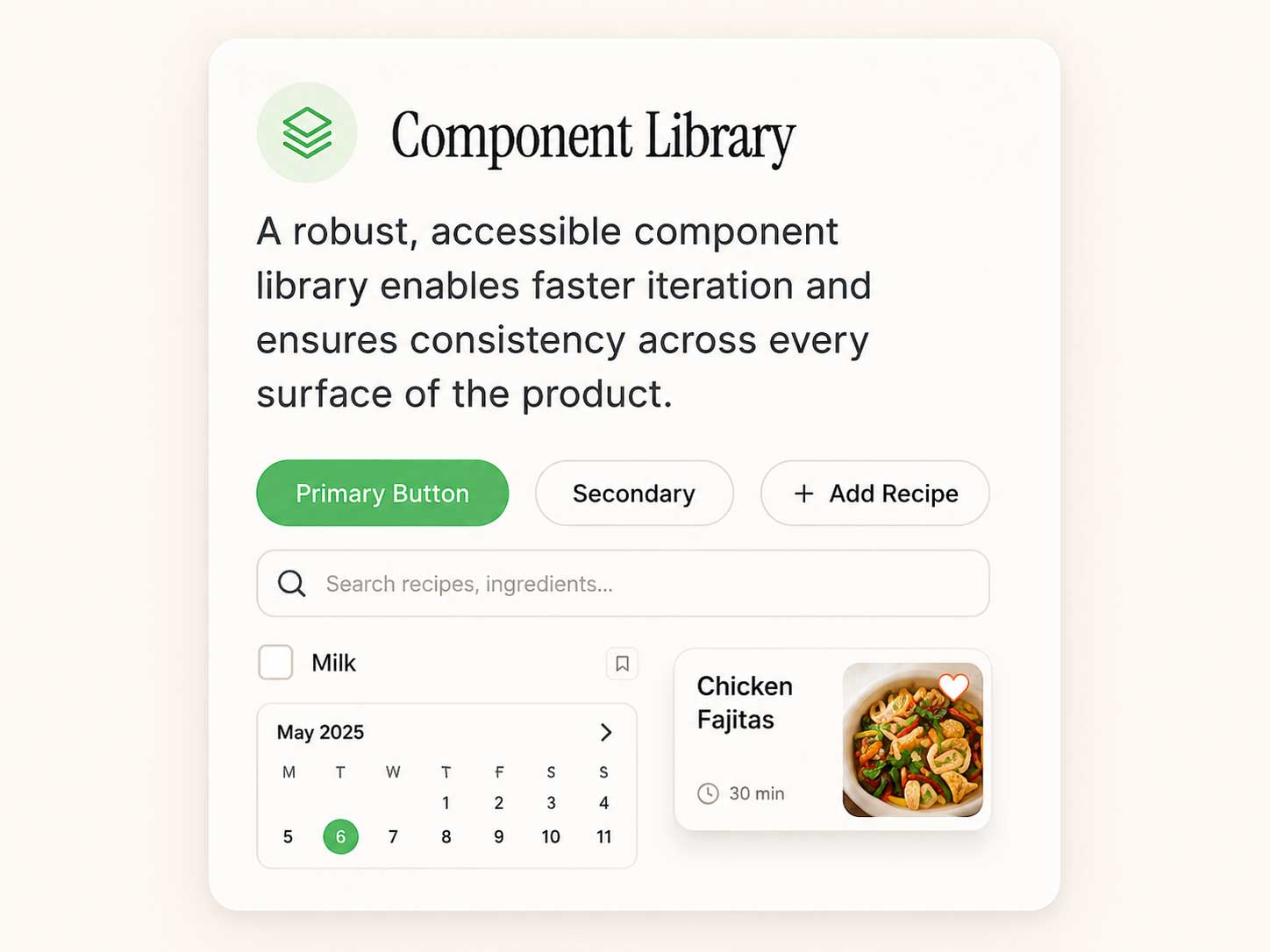
Reusable Components
Shared cards, buttons, forms, inputs, modals, and empty states create consistency across features.
Interaction Patterns
Common actions and states use predictable behavior, feedback, and hierarchy throughout the experience.
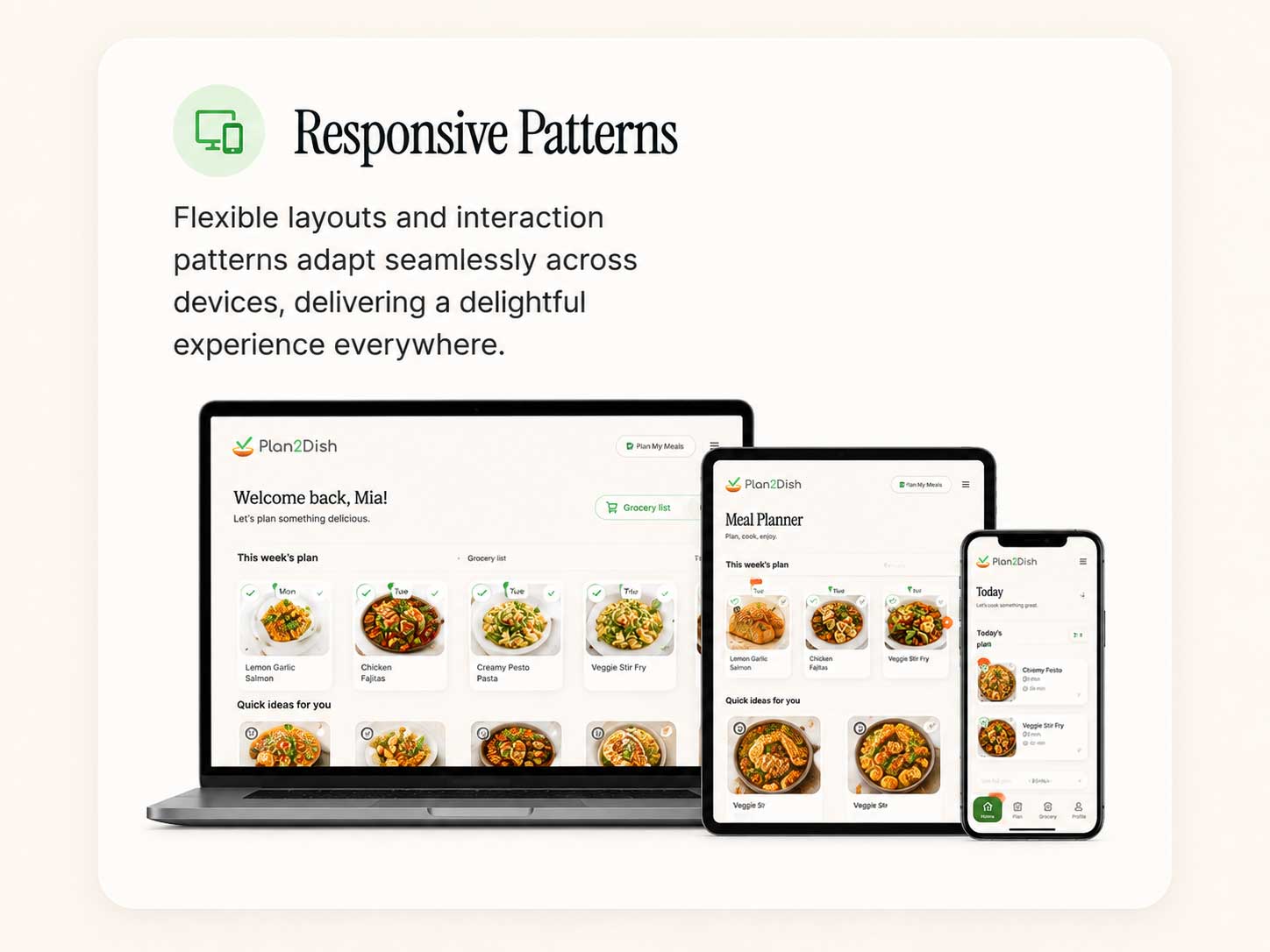
Responsive System
Components adapt across mobile, tablet, and desktop while preserving the same core workflows.
Accessibility
Contrast, focus states, keyboard flows, and semantic structure were considered as part of the system.
Scalable Patterns
New features reuse established components and conventions rather than introducing one-off solutions.
AI Experience
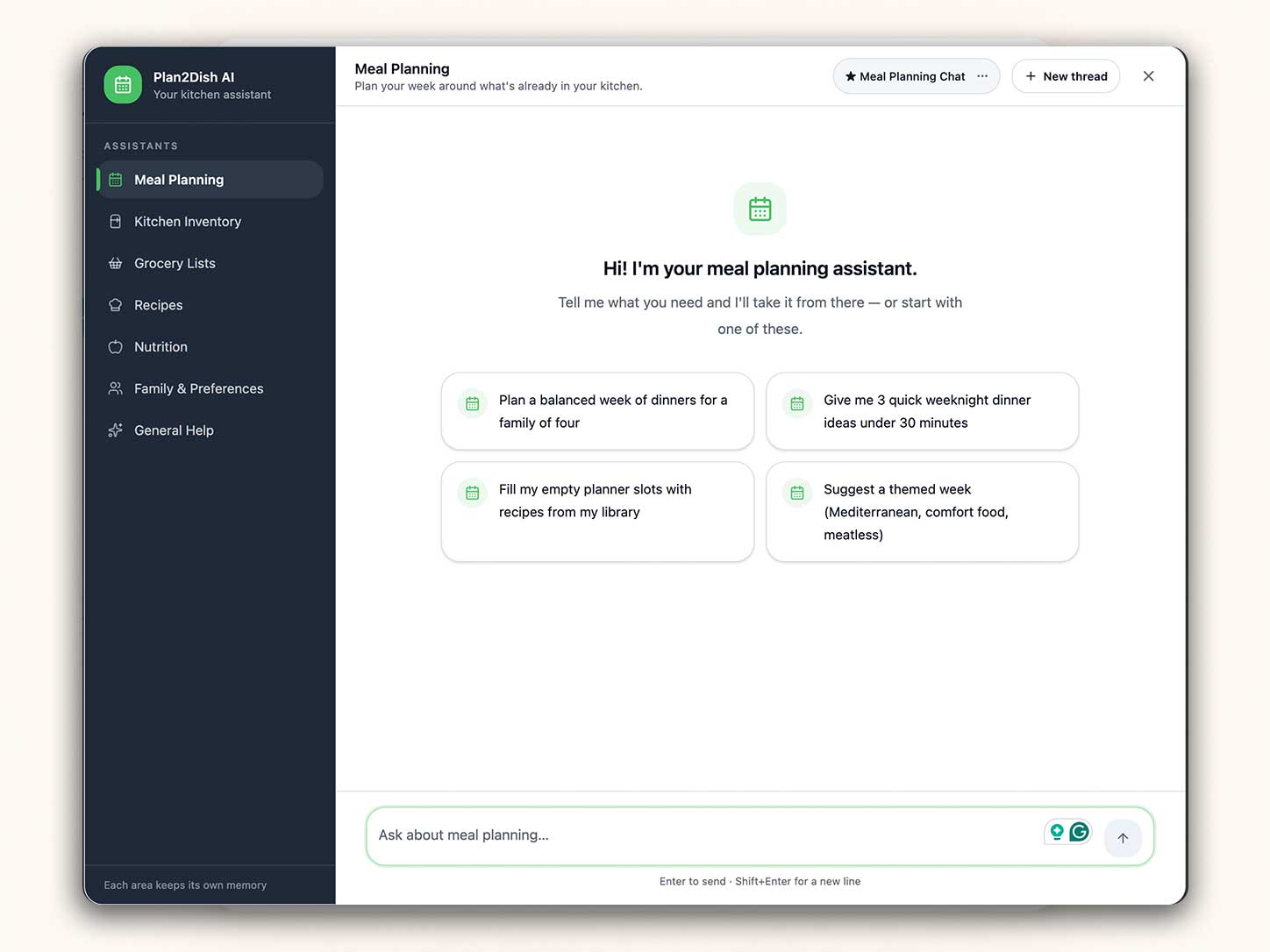
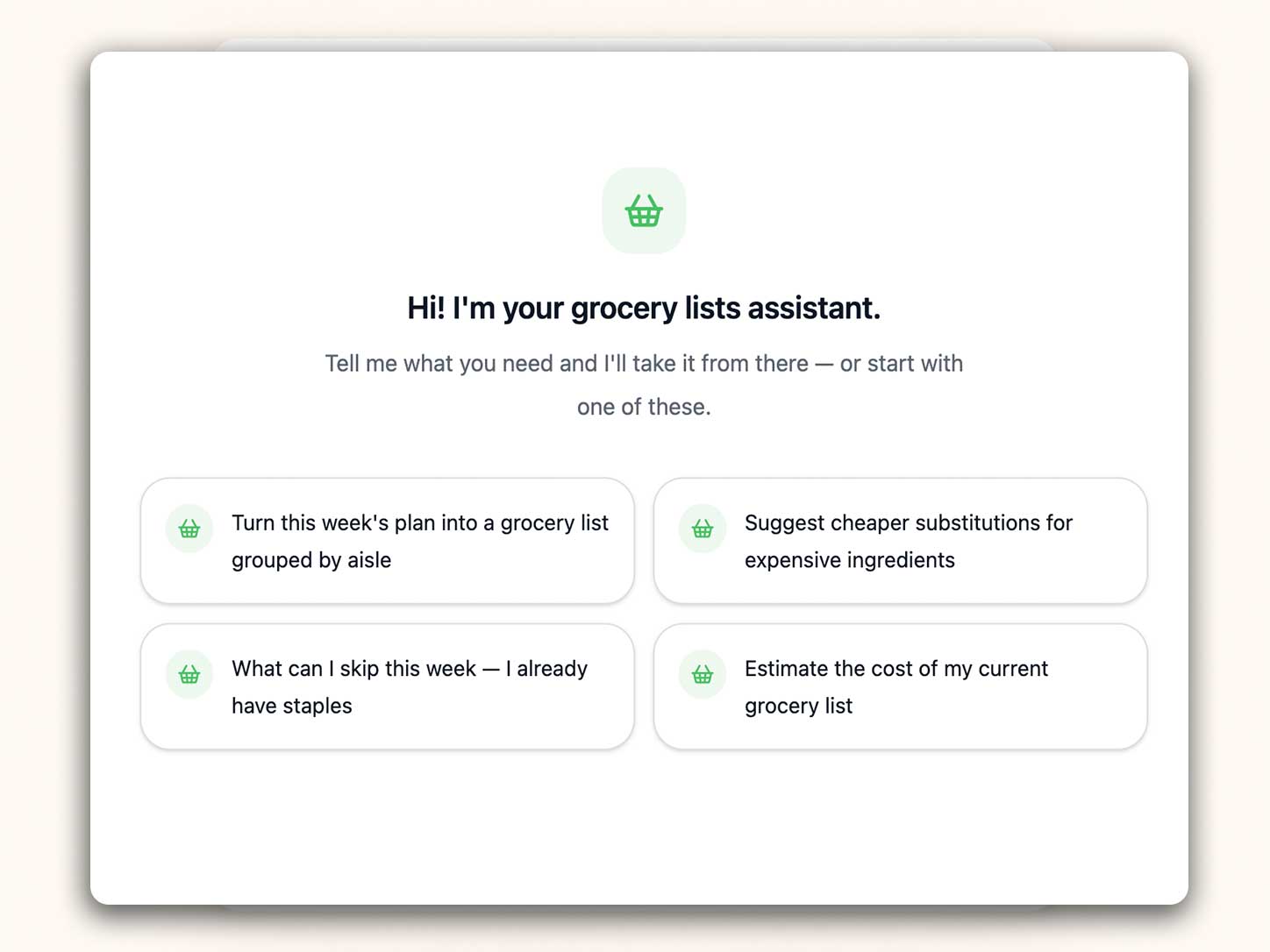
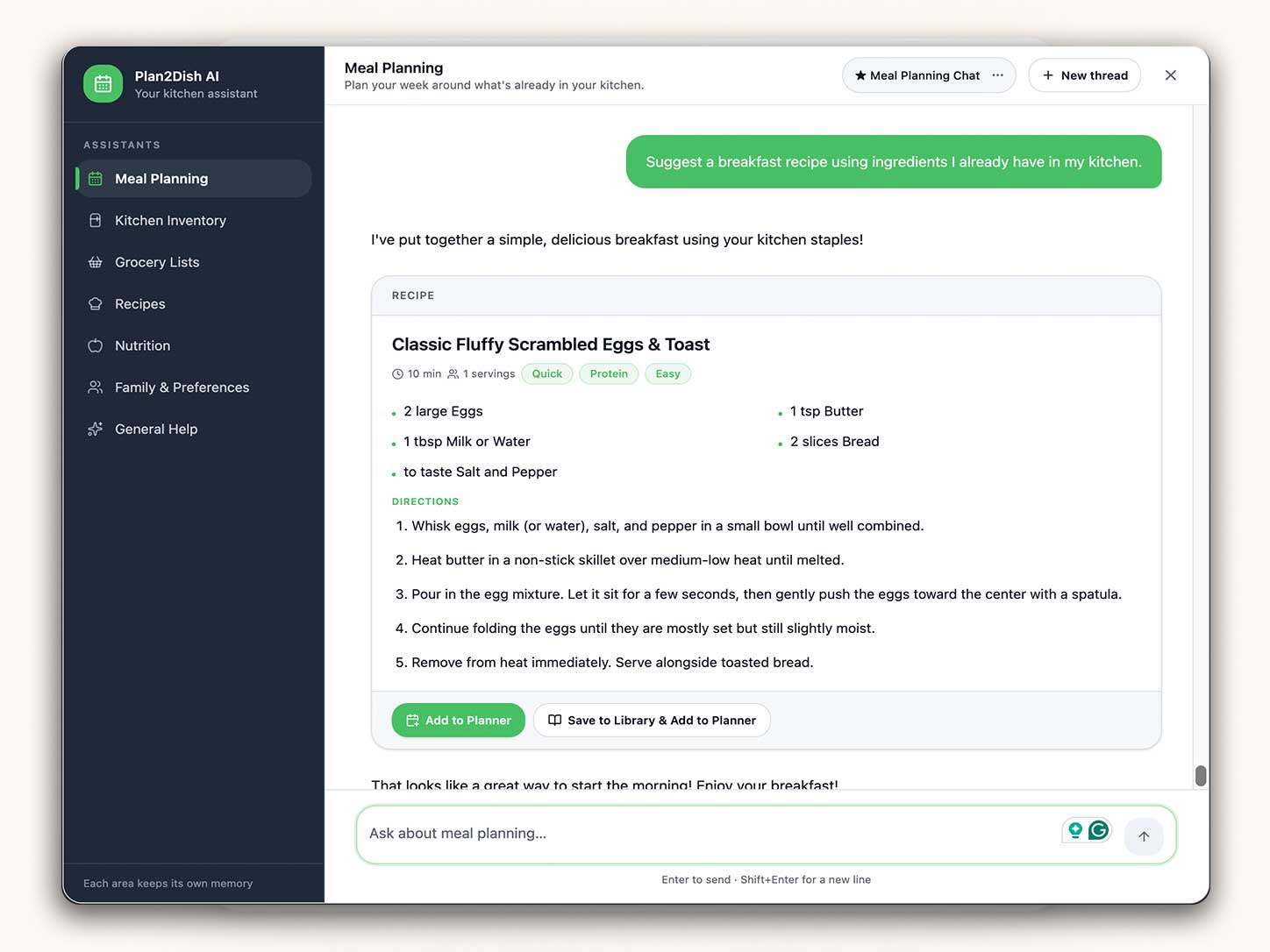
AI in Plan2Dish exists to remove decision fatigue and everyday friction, not to replace the user. Every AI touchpoint is designed to feel like a thoughtful kitchen collaborator that already knows what's in the pantry, what the family enjoys, and what needs to happen next.
Why AI was included
To solve real household problems: what to cook, what to buy, and how to use what you already have.
Supports, doesn't replace
AI proposes and explains. The user always makes the final decision, edits freely, and stays in control.
Contextual conversations
The assistant understands ongoing context — the current meal plan, inventory, and family profile — instead of starting from zero every time.
Kitchen awareness
Recommendations are grounded in what the household actually has on hand, not generic recipe suggestions.
Inventory recommendations
Suggests meals that use expiring items first and flags ingredients running low before they become a problem.
Recipe assistance
Answers cooking questions, adapts recipes to dietary needs, and scales portions on demand.
Future AI opportunities
Voice-driven cooking mode, smart shopping optimization, nutritional coaching, and deeper personalization over time.
Product Highlights
Measuring Success
Because Plan2Dish is still in early access, success is measured through product behavior, user feedback, and signs that the experience is reducing everyday friction.
- ✓Users can create a weekly meal plan with less effort.
- ✓Kitchen inventory helps reduce duplicate grocery purchases.
- ✓Grocery lists stay connected to planned meals and available ingredients.
- ✓AI recommendations feel relevant to household needs and preferences.
- ✓Families return regularly because the product supports a recurring weekly routine.
What Makes This Project Different
Plan2Dish demonstrates what it takes to lead a digital product from an early idea to a live experience used by real families.
- ◆The product began from a blank page, not an existing interface.
- ◆Every workflow balanced user needs, business priorities, and technical constraints.
- ◆The work spanned product strategy, UX, branding, AI, accessibility, and implementation.
- ◆Launching a real product required continuous decisions beyond interface design.
Lessons Learned
Shipping creates real learning.
Real feedback begins when people use the product. Launching an early version helped me validate assumptions, identify friction, and improve the experience through actual use.
AI should reduce friction.
The most useful AI supports an existing task rather than interrupting it. This principle shaped Plan2Dish around contextual suggestions, smart defaults, and assistance that keeps users in control.
Small improvements compound.
Clearer labels, fewer steps, and predictable interactions can meaningfully improve a recurring workflow. Small refinements became an important part of making Plan2Dish feel easier over time.
Launch is the beginning.
Plan2Dish was designed to evolve through user feedback, product behavior, and a deeper understanding of how households plan, shop, and cook.
“Every design decision should earn its place.”
Looking Ahead
Plan2Dish's next phase focuses on making meal planning more collaborative, connected, and personalized. Future development will deepen household coordination, improve grocery workflows, and expand AI support without adding unnecessary complexity.
Final Reflection
Building Plan2Dish required me to move between product strategy, research, design, AI, implementation, and launch. It reinforced that strong product leadership is not about owning every answer. It is about making thoughtful decisions, testing assumptions, and keeping the experience focused on the people using it. Plan2Dish continues to evolve, but the central goal remains the same: make an everyday household task feel simpler, calmer, and more connected.